Wednesday, October 9, 2013

Preventive Maintenance, Part 4

Fuel System for today. Fuel system, just, fuel system, petrol, and not diesel in particular.

Many people dismiss this and neglect this as much as their air intake and lubricating system.


Just a brief explanation of a fuel system before I start both diagnosis and explanation :

Electronic Fuel Injection : Fuel tank --> Electric Fuel Pump --> Fuel Filter --> Injectors --> Engine
Carb : Fuel Tank -->Fuel pump --> Mechanical Fuel Pump --> Fuel Filter --> Carb Jets --> Enginee

The EFI injectors are controlled by the ECU. Fuel pump usually pumps constant supply unless it's variable voltage and you don't see a fuel pressure regulator along the injector rails. Filters are in a metal canister as the fuel pump produces pressure constantly and it's pressure level is controlled by vacuum and boost that's in the intake manifold. The frequency of duty cycles of an injector will be controlled by the ECU, and the ECU sends data to the injectors according to : 1. how much airflow it senses from the airflow meter / 2. how much pressure it senses from the manifold absolute pressure(MAP) sensor.

The CARB engines are purely and usually mechanical. The mechanical pump in turn is rotated by a rocker arm by the camshaft and sucks fuel from the fuel tank. The carburetor, along with your right foot, will determine how much air and fuel is taken and mixed before it goes into your engine. Wont elaborate much on this.


The below are results of having a dirty fuel system : 

  •  Rough idling or low idling - the car can barely idle or is idling at a lower than usual speed.
  • Engine Knocking - Pinging or a rattling noise heard.
  • Jerking, hesitation - As said, engine jerking.
  • Fail puspakom - Failure of emission test.
  • Problem during cold start - Car hesitates when on cold start.
  • Performance loss - Loss of power.
  • High fuel consumption - increase in fuel consumption, reduced gas mileage.


There are various factors for the above to happen, along with various solutions :


INJECTORS


Injectors are supposed to spray the right amount of fuel into the engine and this has to be really taken care of to avoid the above problems.


 Dirty injectors
The pics describes everything. Improper spray pattern may cause insufficient and inconsistent volume of fuel being sprayed into the combustion chamber through the intake valves.


Injector Layout
This is the inside of an injector. So complex, so many parts. Heck, this has more technology than your nokia 3310, hence, the importance of keeping it clean most of the time before the microparticles cause them to get stuck.


Ultrasonic Cleaning & Flow Testing
For worse case scenarios, injectors are taken out for ultrasonic cleaning. All gunk falls off from the sidewalls of the nozzles and so on.

The injectors are then flow tested according to various pulses, speed and duty cycle. There are also measurements of ML on each tank at the bottom of the injectors to ensure that all of them sprays a consistent volume of cc. Injectors cc/min can be calculated here.


Summary for the injectors affecting your car :
Your injectors, if they have abnormal spray pattern, air and fuel may not be able to mix properly hence causing hesitation. This can also be caused by the incorrect volume being sprayed, whereas all four cylinders will not combust at the same compressed air/fuel mixture. We all know that various mixtures produces different power. *Spark plugs color may or may not be able to tell you which injectors are defective(we will go into that later)


FUEL FILTERS


Filters, just like the one above, are well... filters. They filter whatever particles that's being sucked along with petrol from your fuel tank. I will also talk about your fuel tank later. This has to be kept clean to avoid the above problems too.


Dirty / Clogged Filters
Dirty, clogged. This restricts fuel. Maybe lets dirty fuel into the engine too. Injectors get clogged that way, imperfect combustion too due to lack of fuel for both carb and efi engines along with less purity of your fuel.


A before and after replacement. Notice the difference in colour and cleanliness?


Diesel filters will need a more often replacement due to it;s dirty nature.
The solution to the above is fairly simple.... REPLACE IT. They are fairly cheap and should be replaced probably every 20,000km just to keep things clean. Again, a clean engine is a healty engine. You may have some moisture stuck in there too!


SPARK PLUGS AND FUEL TANK


PLUGS - Plugs can tell you a million stories about how is your engine running. Rich, lean, or stoich.


 This is a chart of various plug readings and conditions. You can enlarge this for easier reading or juat for reference.


 Okay, now THIS, shows an uneven spark plug condition. Look at number two. This cylinder is running generally leaner than the rest of the plugs. You may want to check and see if the injector is spraying properly in this particular cylinder. A white plug is a lean plug.


White vs Black plug. Lean plugs shows lean mixture. Black plug shows super rich mixture and improper combustion.

If it is not tuning, something somewhere is clogged. Either injector or air filter. You may even have an incorrect fuel pressure or a weak fuel pump.


 Same case.


FUEL TANK - No pictures needed for this. Fuel tank acucmulates dirt and moisture over time, I will elaborate on how to eliminate this shortly. Reason being is because every time you fill your tank at the gas station, there is bound to be moisture, or even worse, WATER, in the station's under tank. These gas stations do not pump water out of the tanks everyday, but only from time to time. So you have pretty much of a rough idea on where it goes.


SOLUTION

Now, many of you can hardly find a workshop with ultrasonic cleaning and flow testing, and a handful of you will go for off the shelf "fuel injector cleaners". I can only tell you that you want particles to melt off the sidewalls of the injectors and fuel filter, not fall off and clog the injectors. And I believe that there aren't many cleaners out there that can do the trick.

There is ONE product, also what I've been using for years and what I've been selling for years that will do the trick :


 This is the brother of Lambda Primer, Lambda Tank Otto. This particular cleaner is also is endorsed by TUV, ROHS and VAG. It slowly melts deposits off and is widely used in the UK for cars that fail emission test. End users are welcomed do their own personal testing before and after with an external lambda sensor.

Recommended dosage for our local market is a 125ml bottle for cars below 2000cc and 250ml for cars that are 2000cc above. Applicable for only petrol engines. Lambda Tank Diesel also available.

Price is RM50.00/125ml and RM95.00/250ml. You can get it HERE. Pricing, availability, packages, location for COD and REVIEWS are all in the said link :). The frequency of this product is to be used after every 20,000km.


The below function of this product is taken from http://www.ruf-lambda.de/eng_version/l_produkte/tank_otto.htm

TANK OTTO

Effective cleaning of the petrol fuel system prevents problems associated with the build-up of dirt and deposits and ensures optimal combustion, substantially lower emissions and reduced environmental impact.
What it does
Removes moisture and condensation from the fuel system. Thoroughly cleans the complete fuel system and combustion chambers. Long-lasting effects ensure the prevention of obstructions due to build-up of dirt. Removes carbon deposits.
Product description
Multi-function cleaner for petrol-engine fuel systems and combustion chambers. Contains a synthetic lubricant which provides long-lasting protection against rust and corrosion as well as slowing down the build-up of dirt and deposits. Extends the life of both petrol system and engine.
Deposits removed
Rubber, gum, sulphur, and varnish contained in petrol as a result of production methods, as well as deposits which accumulate due to oxidisation of the fuel. Oxidisated and corroded metal caused by a mixture of water and alcohol in the system.
Suitable engine types
All types of petrol engines which run on leaded petrol, unleaded petrol, and liquid petroleum gas (LPG), with or without catalytic converter. Recommended for catalised and turbo-charged engines.
Areas treated
Petrol tank
Fuel pump
Fuel pipes
Injection system
Combustion chamber
Carburettor
Fuel distributor
Inlet and exhaust valves
Oxygen sensor
E.G.R. valve
Catalytic
converter


Areas the product treats:
Removes deposits, cleans and lubricates the pre-combustion area as follows:

  • Fuel tank
  • Fuel lines
  • Fuel pump
  • Fuel injectors
  • Intake ports
  • And/or carburettors
  • Valve stems
  • Valve seats
  • Combustion chambers
  • Heads of intake valves

Post combustion areas:
  • Seats egr valves
  • Catalytic converters
  • Stems & heads of exhaust valves
  • Oxygen sensors


Summary Overall :

Once the entire fuel system is clean, there is no need to be worried for upcoming problems. Once the problem occurs, your fuel system can immediately be ruled out :)


Cheers

Elton

Thursday, October 3, 2013

Preventive Maintenance, Part 3

This time round, it's all about keeping your lubricating system clean, which I think is the second most important thing for a healthy engine.


Back to square one, engines lose power over time and some drivers may or may not realise it. They also increase in fuel consumption, etc.


WHY?
Sludge, varnish, gunk, carbon are all produced along the combustion process of an engine. You lose power over time from carrying sludge and an increase in friction. And when that happens, your fuel consumption increases.

You may also get little little micro particles that somehow magically bypassed the oil filter running around the engine causing microscopic scratches and damages onto your cylinder walls and bearings. You may also get sticky valves, jammed piston compression and oil rings and engine hesitation. Not to mention stucked hydraulic lifters too.


And THIS, is how a gunked up engine looks like, taken from pakwheels.com. A BMW engine that probably sticks to the 15,000km OCI.


.......................


Scary isn't it?


Many people would go by the statement :

"I don't believe in engine flushing. I rather take it all out and clean it."


There are probably only two possibilites for the above statement to be implemented into their heads :
- They tried a flush, so strong that it screwed up the oil seals, caused compression loss, caused smoke, caused oil loss, and caused engine seizing. Sad but true.
- They never tried.


Well, there are two kinds of flushes in the market :

Normal off the shelf engine flush - Flush that does nothing but more harm to your engine as per the above "possibility". These flushes have super high solvent/detergent and is a big no-no for your engine. Affordable to the oblivious.

A good, proper flush - a flush that restores engine compression, effectively removing gunk not my letting it all just fall off, but slowly melting it, using it to seal, prime and cover most or all microscopic imperfections in the engine, yet being harmless to oil seals. Pricey to the oblivious, worth the money to those who tried and those who believe in it.


Much said, the above has already stated why I would believe in an engine flush and started sourcing for a good one two years back. Done selling more than 1,000 bottles in three years with promises of a cleaner, meatier and more powerful engine, the flush has done it's talking in the long run.


Pros of a Good Flush :
- Cheap

 Cons of a Bad Flush :
- Corroded oil seals resulting in engine leakage
- Compression loss
- Increased oil(engine oil) consumption
- Power loss
- Clogged in certain parts of engine(very little possibility)
- Car cannot be driven when flush is in the engine


Pros from a Good Flush :
- Restored engine compression (comp test can be done before and after)
- Reduced fuel consumption and oil consumption(if any)
- Sludge got rid of the correct way
- Car can, and safe to be driven when flush is still in the engine
- Car feels lighter and smoother
- Engine operates more quietly
- Have certain endorsement from TUV RUF ROHS, etc.


Method of Flushing
There are a couple of ways to flush an engine as per below :


HD40 oil
This can be found in spare part shops at less than RM200.00 for a 5US gallon aka 18litre can. They are monograde oils if I am not mistaken. High detergency, cleans effectively.
You can either do an oil change without changing the filter and let idle for 15-30mins and drain it out. You will notice that the oil drained out will still be dirty. Repeat process several times until the oil drained out is of the same color as when it was initially put in. It is black the first time it's because the current oil is contaminated with what's left in the system after the initial drain before flushing.
Alternatively, you can pour in a bottle of good flush on the first or last change. Another way will also be to drive with the hd40 oil for a fair amount of kilometres and drain out.


Machine Flush
I've seen this in several shops before. I'm not sure how it works but I'm pretty sure it's done with the engine not running. Pressurized and detergent would be the keyword here. Detergent in from the oil filling area, I'm not sure out from where. No comments on this.


Pour your own flush in
Pour a good flush in, let it do it's work while you drive the car. Do use the cheapo ones as they only spell disaster. You have to give the good flush some time to do it's work too, so please bear in mind on not to drain it out too fast.

Drain the oil, swap your oil filter and use your desired oil.


Threebond Engine Conditioner
 Threebond? Why threebond? You may ask. I've came across cars with excessive blowby but no compression loss. Can't blame valve seals as the result of thorough diagnostic shows symptoms of problems within the short block.

We are talking about stick or jammed oil rings on the piston. They no longer expand and scrape oil due to sludge, probably.

Threebond will be used to fill up all combustion chamber, soaked, and cranked to free up the oil rings. This method is used because threebond is known to be way stronger in removing dirt and grime compared to real good engine flushes, where they are only used to restore compression, not 101% clean the engine, but just... clean enough. A seller that tells you his flush can 100% clean your engine is pure bollocks.


You obviously want to know the result of spraying threebond into your combustion chamber letting it soak down into the lubricating system, right?

 Engine was cranked without the spark plugs and this box was put on top of the valve cover. These are the results.
 All four cylinders. Of course, engine oil was immediately changed after that due to dilution and loss of oil pressure as the threebond thinned out the engine oil after doing it's work. This was realized in advanced and professionally handled so it's not "not a good thing, don't do it!"


Resultwise? The engine somehow became way lighter and I had 15% savings on fuel consumption. No kidding.


Last but not least, for the still-non-believers. Strip the entire engine down at your cost and clean part by part, or at least try sticking a toothbrush in. HOWEVER, keep in mind that only a handful of mechanics know how to use a plastic gauge along with an engine rebuild.


BEFORE AND AFTER


As per above picture, one is before and one is after an engine flush/cleanup. Usually if it sludges up till it's this bad, we give the non believers the benefit of the doubt by stripping the whole engine down. It will be a thoroughly long process to flush the above gunk out. Picture above is just as a reference, no offense guys.

Of course, you have to also take into consideration on what kind of engine oil are you running on for the past X amount of years. The above pics are probably due to extended OCI, cheap oil, etc.

Now, you all may ask what flush am I personally using and selling. Please read below :


Lambda Oil Primer. This particular flush is endorsed by TUV, ROHS and VAG. It slowly melts deposit and primes the engine for engine compression restoration. End users are welcomed to do a compression test before and after the flush is used.

Recommended dosage for our local market is a 125ml bottle for cars below 2000cc and 250ml for cars that are 2000cc above. Applicable for both petrol and diesel engines. One of the best premium flush I've ever used.

Price is RM50.00/125ml and RM95.00/250ml. You can get it HERE. Pricing, availability, packages, location for COD and REVIEWS are all in the said link :). The frequency of this product is to be used after every 20,000km.


The below function of this product is taken from http://www.ruf-lambda.de/eng_version/l_produkte/tank_otto.htm

OIL PRIMER
Effective cleaning of oil and lubrication systems prevents problems associated with the build-up of dirt and deposits whilst ensuring optimal combustion, substantially lower emissions, and reduced environmental impact.
W
hat it does
Cleans
oil and lubrication systems thoroughly and with long-lasting effect. After treatment you will have clean oil in a clean engine for hundreds of miles.
Produ
ct description
Specialised cleaner for engine lubrication systems, transmissions, and differentials. Contains a lubricant which protects mechanical parts during the cleaning process.
Deposits removed
Build-ups of combustion residue, light and heavy carbon deposits, dirt from ageing motor oil, and metal particles which result from engine wear.
Suitable engine and transmission types
All types of modern or older petrol and Diesel engines whether lubricated with mineral-based, semi-synthetic or fully-synthetic motor oil. Suitable for manual transmissions and differentials. Also very well suited to industrial gearboxes.
Areas treated
Sump
Oil strainers
Camshaft
Turbocharger
Cylinder liners
Piston rings
Valve oil seals
Hydraulic tappets
As well as all surfaces which come into contact with the cleaning agent without being under oil-pump pressure.
© LAMBDA-RUF


Areas the product treats:


Oil pick up assembly
All lubricated surfaces where oil circulates under pressure.
Cylinder liners
Oil lines and galleries


Oil Sump Area
Turbocharger Bearing Area
Camshaft and Cams
Oil Pump
Mechanical and Hydraulic Valve Lifters
Piston rings and their seats
Valve Trains
Bearings

Types of deposits:

Soft/hard carbon, tars, varnishes, lacquers, sludge, acid corrosion and condensates.


Another alternative, expensive method is to keep your engine oil as clean as possible by placing a super strong magnet onto the oil filter. No, we are not talking about cheap wussy looking oil sump magnets what are not strong enough to resist oil-flow and pressure.

THIS, is what I am talking about :


 Filtermag. One of the best filter magnet's I've ever, and still am using. Comes in various sizes and even for auto transmission. This item is no longer available for sale.

 The top area has no magnetic force just in case you have an alternator or compressor on the other side of the oil filter


Brute force, not easy to come off due to it's 200+ pounds of pulling force!
 Inside. It's neodymium.


A cut-out filter with the magnet still on. These are micro metal particles. Some are so fine that they are finer than the engine oil itself, or your hair for that matter. If these cant go through your oil filter, your engine oil can't.

Having this magnet, it is said that your engine oil gets dirtier at a lower rate due to less dirt suspension in the oil.


This is another long post. Time to call it a day.


Thanks for reading guys! Do come back soon for posts on fuel system cleaning!

Monday, September 30, 2013

Preventive Maintenance, Part 2

Hi Guys,


I hope the last post wasn't too boring for you with the lack of pictures. In this second part of "Preventive Maintenance", I will be elaborating on the air intake area and why is it to be kept clean. There are three main areas to be kept clean for a healthy efficient engine which is :
- Air intake system
- Lubricating system
- Fuel system

And this post, again, will be all about your intake system.


"It is a natural characteristic for all cars to produce carbon over time"


Yeah, you heard that right. All cars will produce carbon regardless. These are a few areas where you will notice sludge forming up with the naked eye :

- Sidewalls of throttle body
- Inside of intake manifold

And these are a few areas where you will not notice sludge forming up with the naked eye :

- Idle valve inside your throttle body(or separate valve)
- Intake valves(for direct injection engines)
- Combustion Chamber


Okay, these places do not form carbon, the engine does. However, these places collect and accumulate carbon. If you are skeptical, you can open up your air filter hose and you will notice a black ring of carbon formed around the butterfly area of your throttle body, as early as 20,000km from the showroom.


- Where is the residue formation coming from?
Leaky intake valves, PCV valve, breather hose that's connected straight into your intake manifold.


- Why is it so important to keep this particular area clean?
This is your air intake system. Imagine sucking on a straw, a clean straw; easy aye? Now, imagine if the inside of the straw is all dirty, it's sidewalls all gunked up, causing the INTERNAL DIAMETER to be smaller... you get less air. It's as simple as that. On top of that, the surface of your throttle body sidewalls become rough and you want it smooth for optimum airflow. As for carb engines, you get clogged air venturies. Same goes for your intake manifold, you want that as clean as possible too.


- My car cannot idle properly. Dirty perhaps?
Most or every cars have an idle valve. And majority of them is like a needle and a hole, opening and closing gradually to allow the correct amount of air to go through as the throttle body is fully closed during idle. When this is all gunked up, it doesn't work properly. Most workshops will conclude that your throttle body needs replacement or will just take the shortcut of installing an FICD. Please note that if your car does not come with an FICD, it is best not to install one on the system.


- What are the benefits of cleaning the intake system?
Majority of car owners will not actually feel that their car lose power or suffer from increase in fuel consumption over time. Cleaning the affected area will actually restore power and efficiency in the engine. A clean engine is a healthy engine, problem free.


- What should I use to clean the air intake system?
This is a very subjective question. There are so many "carb cleaners" or "throttle body cleaners" in the market. Take caution here. Read below :

Engine Conditioners - These are the shinzit. You spray em into the engine and gunk falls off. Nuff said. It's made to do so.

Throttle body / Carb cleaners -I'm not sure about this, and I'm not sure if you can spray this into the engine or is it supposed to be used to clean the throttle body when it is off the car? I tested a few on pieces of rubbers and the rubbers tend to expand. Not good for seals in the carb or throttle body if you ask me.


- What brand do you recommend?
The choice is pretty much up to you. So many brands in the market, It also boils down to how you use it and how effective the product is, and wether the product is harmful to the engine or not. Some "carbon cleaners" are non flammable and non compressible. Be careful as this may or may not cause your engine to hydrolock. Find a suitable one. Also remember that the method of using it is important too.
 
As for me, I personally use and sell Threebond Engine Conditioner. Proven to work on over two thousand cars over two years with positive results. It is safe to use, flammable, compressible(it is already compressed in a can, foam based), and also effective. Result driven. I also have the capability of using this effectively and correctly.


- How do I clean the intake manifold area?
Spray the conditioner, let it soak a little while for all the soft carbon to come off. From there and then you can later do it with the engine running as the heat anf flow will aid in cleaning the intake manifold.


- You mentioned combustion chamber. How clean is clean and is it really necessary?
Not really. The top of the piston need or need not be cleaned as the combustion chamber is only used to compress and combust air/fuel mixture that's being sucked in through the intake valves. 

- How often to clean this area?
From experience, I would say approximately 15,000km. Your car will still be clean 5,000km after the last session of cleaning. At 10,000km, it starts to get dirty and by the time you reach 15,000km on the clock, it is already as dirty as it can be.


Here below are some pictures of throttle bodies and carbs before and after cleaning :


A dirty carb of a saga, you may not notice anything now. Customers usually notice only after cleaning and when giving it a test drive


After Cleaning. See how shiny is it now? Imagine the inside of the carb and the intake manifold


Dirty throttle body of a Kia Spectra. Try to look all the way down into the intake manifold and see how thick gunk is. The holes on the sides are probably breather holes or idle valves which I cannot remember.


After cleaning. No words needed to describe this picture.


You can purchase the engine conditioner here, along with further enquiries(faq provided).


Cheers

Elton


Saturday, September 28, 2013

Preventive Maintenance, Part 1

Hi Guys,

Today, I shall open up a new chapter on preventive maintenance as I've just realise that I have not wrote about anything on maintaining an engine. This, and the next few subsequent posts we will focus on the engine area in terms of performance, longevity and driveability.


Engine Oil

You may think that every 5000km an oil change is sufficient. But please ask yourself the below questions :

- Do you know what oil are you using? I tend to ask my customers that and some aren't able to give me a direct answer. "I don't know laaaa, foreman put in for me one". You have to be aware of what's being poured into your engine in terms of oil brand and viscosity. Oil viscosity is pretty important in the long run and also in terms of fuel consumption and performance. They affect each other.

The common grades being used are 5w-30, 10w-30, 5w-40, 10w-40, 15w-40, 20w-50. There are also less common grades such as 0w-30, 0w-40, 0w-50 and so on. In a general automotive term, 5w-30, 5w-40 and 5w-50 are usually fully synthetic oils whereas the 10w30 and 10w40 are usually semi synthetics. There are cases of 10w30 minerals as well. 15w-40 and 20w-50 are usually minerals. Old school mechanics will swear by their 20w-50 for long term protection. However, most people dont know that a Supra uses 5w-30 or 10w-30.

Back to the question, you need to know what oil are you using. From there and then I can advise you on what's to be used. Okay, smaller cars such as Kancil, Kelisa, 1000cc or below generally run on 30grade, regardless of 5w or 10w. These engines are tiny and have tight clearances. Using a heavy oil has no benefit to the driver.

I usually recommend 40grade to customers driving cars that are above 1000cc such as Myvi, Swift, Wira, or any other car for that matter. Yes I understand that some of your owner's manual do state that 30grade is to be used. However, keep in mind that engines wear and tear over time and clearences between the bearings get wider over time. Just a note, campro engines run generally rough and noisy and it says 30grade on the manual, you guys may want to try 40grade.

Also, too low of a viscosity and the oil may or may nor shear and will lose film strength at high temperatures. IF it is too thick, it will also not circulate at low temperatures.


Usually, I do not refer to the 5w or 10w figures as there is no winter in Malaysia. However, on some special cases I'd recommend 10w to older cars and not 5w. Mind you, take a bottle of 5w-30 and 10w-30 and shake them and compare. You will notice that the oil in the 5w feels a tad thinner. I cannot find time to find the explanation on why is this so but all I know that (referring to the "special case"), the 5w-40 oils tend to burn and consume faster than a 10w-40 oil in engines that have compression loss aka older engines. I assume that the 5w oils have more polymers in them making them a little bit thinner by feel. Polymers are blended into the engine oil so allow them to change viscosity over temperature. Monogrades are also available which I personally think will be better. . I personally do not think that multigrades are needed here in our country, Malaysia.

This is taken from micapeak.com and realclassic.co.uk :

"Multi viscosity oils work like this: Polymers are added to a light base(5W, 10W, 20W), which prevent the oil from thinning as much as it warms up. At cold temperatures the polymers are coiled up and allow the oil to flow as their low numbers indicate. As the oil warms up the polymers begin to unwind into long chains that prevent the oil from thinning as much as it normally would. The result is that at 100 degrees C the oil has thinned only as much as the higher viscosity number indicates. Another way of looking at multi-vis oils is to think of a 20W-50 as a 20 weight oil that will not thin more than a 50 weight would when hot. 

Multi viscosity oils are one of the great improvements in oils, but they should be chosen wisely. Always use a multi grade with the narrowest span of viscosity that is appropriate for the temperatures you are going to encounter. In the winter base your decision on the lowest temperature you will encounter, in the summer, the highest temperature you expect. The polymers can shear and burn forming deposits that can cause ring sticking and other problems. 10W-40 and 5W-30 require a lot of polymers(synthetics excluded) to achieve that range. This has caused problems in diesel engines, but fewer polymers are better for all engines. The wide viscosity range oils, in general, are more prone to viscosity and thermal breakdown due to the high polymer content. It is the oil that lubricates, not the additives. Oils that can do their job with the fewest additives are the best.   

Viscosity Index is an empirical number indicating the rate of change in viscosity of an oil within a given temperature range. Higher numbers indicate a low change, lower numbers indicate a relatively large change. The higher the number the better. This is one major property of an oil that keeps your bearings happy. These numbers can only be compared within a viscosity range. It is not an indication of how well the oil resists thermal breakdown. "


VI and how multigrade works
Multigrade graphTo produce a multigrade mineral oil, polymers are added to a light oil, say SAE 20. At low temperatures the polymers are coiled up and do not restrict the flow, but as the temperature rises they unwind so that at 100 oC (212 oF) the viscosity is equivalent to SAE 50. There is more than one way of achieving this result. The best quality base oils have a higher VI, which is the rate at which the oils' viscosity falls as temperature rises within a given temperature range. This means that less polymer is required to achieve the same result. As it's the oil that does the lubricating, not the polymer, this is obviously preferable and as the polymer also degrades in use the less present to start with the better.
A good quality engine oil will have a relatively low level of polymers and some synthetic oils have such a high VI that they don't need any. Generally the lower the viscosity of the base oil, the more polymer it requires. 10w-40 needs more than 20w-50 for instance, and polymers can shear and burn, thus creating deposits which can cause valves and piston rings to stick. A good quality oil will typically lose up to 20% of its' viscosity in 1000 miles running, the rate of loss then slows and the life of the oil is about 3000 miles in normal use.
Viscosity rating chart


I will have to agree on the polymer clarification. However, this does not mean additives are not good for engines.


Another thing to take note is that our weather is hot, but not as hot as Dubai or the deserts. There is a rule of thumb that oil runs thinner over heat. The hotter it gets the thinner it gets. Not sludge related though. If you are running on an external engine oil cooler, you can generally run a grade cooler as chances of heating up the oil isn't as high.

If you are asking be about oil clearances, please read the below.
The thinner the oil, the lower the oil pressure. The thicker the oil, the higher the oil pressure. Our bearing and bearing journals have to always be in full float when it is rotating to prevent any catastrophic damage. Sufficient oil pressure is needed for this. Not to be too thick though, as you want the oil to be able to still go through the journals. In other words, be a man!! do the right thing! choose the right oil.

Temperaturewise, you will be fine in regardless of any oil you use unless you are one of those who eats brake pads for lunch and revs the car like nobody's business. Try not to let the oil temperature shoot up. I've seen overheating cars with oil temperature gauges and my observation is that the oil thins out and you get to hear bearing noises the moment your engine oil goes above 120degrees Celcius, 110 in rare cases. Disaster is waiting to happen. Try to keep it at 100degrees or less. Various methods can be used to reduce your oil temp :

- External oil cooler
- Sufficient cooling system(water) to remove heat from the engine
- Wrap up the part of your exhaust that's just below the oil sump
- Good quality oil that doesn't break down over time
- Keep the engine frictionless, aka flush from time to time. Or you can use some pretty decent additives.


A good engine oil will not break down over time. Gone are the days where people run on C*****l G*x telling me that this oil is good. I want you to keep an eye on the below scenario :

"Woah!! Everytime I change engine oil, the car feels like brand new weyhh!!"


This is not good, I repeat, not good! You end users may think it is a good thing. Little did you all know is that the current oil in your engine has already broken down and stopped protecting the engine. The main three roles of an engine oil is to LUBRICATE, COOL and PROTECT. What you all should feel is that your engine does not feel any different even after your oil change. This is assurance to your conscience knowing that the oil in your engine is still doing it's job. So here, a good oil will last throughout it's recommended Oil Change Interval(OCI) whereas a normal or lousy oil will only last about two to three thousand kilometres.

Oils also have certain additives which makes them outstanding compared to their competitors. They all have normal based oils. The additives are added and blended into the oil for either that extra smoothness, performance or longevity. Two good examples will be MoS2 or ester.


- My service manual says 5,000km or 3 months, or whichever comes first. Or in other cases, 10,000km or 6 months, or whichever comes first. Why? Wanna suck my money ah?
Relax guys. Oils have very long shelf life. But one more thing that people wont tell you is that oil is hygroscopic once it's exposed to heat, or at least that's the only theory I can come up with without any lab tests done. Hygroscopic means they absorb moisture, just like brake fluids.  When they absorb moisture, they lose their properties over time, hence the term "whichever comes first". 6 months probably for fully synthetic and 3 months for mineral oils. No confirmation or estimation on semi synthetics. Anything above this, there is a risk of sludge formation and oil thinning out, allowing the bearing an journals having a catastrophic intercourse.


- What oil should I use? Err... T***o oil can ah?
This section, we will divide oils into three categories once you have chosen the right viscosity for your oil.

Section 1 ~ "Performance" type of oils, Torco and motul for example. You pour these in, it feels real light and free revving, power unleashed.
Pros : As per said as the above.
Reason for Pros :  Friction-reducing additives blended in. Whatever that's good for friction reduction is put into this oil.
Cons : Craps out after 1000-2000+ km, way before OCI. Feels sluggish. A little bit pricey.
Reason  for Cons: These oils are so called race oils, where people use them and change them out after most or every track session. They break down fast, accelerated wear and tear.

Section 2 ~ "Normal" oil, C*****l G*x, B*r***l, L*x*s, and a few other reasonably priced oils. They are cheap, affordable, and don't give any benefit in terms of performance nor protection. Most service centres sell these.
Pros : What pros? Cheap I guess.
Reason for Pros : Cheap. For people that couldn't care less.
Cons : Long term sludge, sluggishness, "refreshed" feeling after every oil change
Reason for Cons : Cheap blend.

Section 3 ~ "Protect"ing type of oils ~ These are oils of my choice. Liqui Moly, Chemlube, Pennzoil Platinum, etc.
Pros : Long term protection, does not break down over time, not as fast as those of in Sec1 and Sec3 as per above. Very smooth and quiet
Reason for Pros : Same as S1, but more additives for long term protection is used.
Cons : May not feel as light as S1 oils. A little bit pricey. Most German oils are in this range.
Reason for Cons : Same as reasons for pros.Costwise a little bit high.


-So between S1 and S3 oils, which one should I choose?
I'd take s3. You can always choose s1 or s2, however, many cars I've seen that ran on s1 oils(OCI on time) for a long period of time end up with rattly and shaky engines. You can hear it all making noise. Cars that run on s3 oils for a long period of time(OCI on time) tend to still operate silently even after 100,000km. This is because long term protection was provided by the engine oil. Choice is yours, ball is in your court.


There are also other factors such as looking out for a good oil in terms of zinc percentage and flash point temperature which I will not elaborate. You can open the below two websites for more info :

http://www.realclassic.co.uk/techfiles/oil030319.html

http://micapeak.com/info/oiled.html


Cheers

Elton


Thursday, September 26, 2013

Perdana, Waxed!!

And so the Perdana has been driven around carrying my pride, riding with joy. Some call it the great white shark, some call it the white knight in shining armor, some call it a fucking space ship. The car was kept clean, as humanly clean as I possible could.

However, I realised that I was missing out on one thing. Paint protection. As hard as the clear coat can be, a layer of wax, and sealant is necessary, and so I got down to business, waxing the car myself. Notice the water beading after a night of rain?  (Products used on this will be shown later)


Sooner or later, I started to crave for extra glossines, and the wet look an after-waxed car could produce. I wanted the car to shine as much as possible. Carlack's  Systematic Care Synthetic Waxdid the job just right! 


Little did I know that I sent my car to a Meg Car Wash centre and God knows what soap did they use. It stripped my wax and I was hesitating to get it done again.

I called in the calvary in the form of Ian Peterson Lo who does detailing at home and paid him to do the waxing again as I didn't have the time nor patience to re-wax the car. Water couldn't bear anymore by the way.

He started off applying a layer of Car-Lack 68 Systematic Care Synthetic Wax around the car in thin layers. Let dry for about ten minutes and it was later buffed off. Looks like it was just like when I waxed the car two weeks ago! He took much of a shorter time as he was more experienced in detailing and told me that I was too generous on the application thus making it harder to buff off after drying. Run your fingernails backwards or not, you will feel that there is a real hard layer of coat that's on your paint after buffing. This, is ACRYLIC WAX.


The below product elaboration is taken from www.carlack.com

This product combines a highly effective paintwork cleaner and a resistant sealant. In one process Carlack Complete cleans pore deep and removes paintwork oxidation. The technology-prize-winning polyethylene acrylic compound seals the surface with a protective polymer layer, providing high-level preservation and protecting the surface extremely effectively against harmful environmental influences. Carlack Complete creates a brilliant shine without laborious polishing and can be used on wet or dry surfaces.


The next step Ian took was to apply a layer of Car-Lack 68 Long Life Sealant for that extended maintenance interval and intensified enhanced unmatched gloss one could ever get from his or her ride. This is to be used in addition to the Systematic Care. The steps were pretty much the same as the above. The results? It looked even glossier. Nuff said. Just, glossy, fucking Glossy.

Carlack Long Life is the essence of Carlack sealant technology.
The concentrated formulation based on acrylic polymers is specifically designed for sealing new and conditioned paintwork. The paintwork is highly and durably preserved. The micro-fine protective layer reliably protects against harmful environmental influences and chalking as a result of sunlight.
Carlack Long Life is the perfect addition to Carlack Complete system care since it serves to intensify shine and extend maintenance intervals.


Photos were taken, water beading tests were done again, and everyone was satisfied. Below are a few pictures along with descriptions that will answer some of the questions you have in your head.


 Ian, working on one of the panels with the very first layer with a sponge, making sure he doesn't miss a spot given poor lighting conditions. Yeah, my schedule is tight and we couldn't find a suitable place to do it.


 Ian again, and a friend messing around. If I'm not mistaken, this is the second layer where the sealant is being spread on with a different sponge. According to him, both the wax and sealant was easy to apply and buff off with a polishing/microfibre towel. He was also pretty much satisfied with the finishing.


 Here in this not-so-clear picture, a few guys inspecting and admiring the glossiness of the car. Note the poor lighting condition and how the car is still able to reflect light.


 Above in this picture, the entire car was done. It was 2.30am by the time we finished as we started off a bit late. It was also a drinking session lol.


 The best part, the roof! My roof is black. And a detailer always loves seeing the results on a black painted surface which shows a mirror finish. Shows that his hard work paid off. Flawless much.


These two pictures, Kenneth. The right picture with flash, and the left one being without flash. Both the finished area of the roof being able to reflect light. Shine :)


Overall, everyone was satisfied and it was a tired night. The car was looking glamorous, it's shine restored. All thanks to Ian(unfortunately, it was also his birthday. Happy Birthday Romeo Ian!!) and the people around him accompanying him through the job.
Below are pictures of the products used : 


CarLack 68 - Nano Systematic Care (300ml)


Also known as Klasse All In One CarLack 68 - Nano Systematic Care car wax is an easy-to-use paint cleaner, polish and synthetic car wax (sealant) in one.


CarLack 68 - Nano Systematic Care is not a traditional wax or polymer sealant. The exclusive German Car-Lack formula is a tough acrylic car wax formula that has stood the test of time.
Many miracle products have come and gone, but Klasse car wax products are still going strong.

CarLack 68 - Nano Systematic Care quickly polishes away oxidation and light paint contamination leaving a deep, rich shine that lasts for months. It bonds to the surface like a normal carnauba car wax, however, it does not change the paint in any way. Car-Lack layers on top of the paint, building depth of shine and clarity for an ultra high gloss finish.
Car-Lack contains special cleaners and a fine polish that quickly and easily removes old wax, road film, light oxidation and minor swirl marks. It’s a premium one-step product that cleans, polishes and protects with very little effort. Best of all, the finish lasts and lasts. In most cases, two applications a year will keep your car protected and looking good. Plus, Carlack does not contain silicones and it will not stain your car's vinyl and rubber. Application could not be easier!
Extra gloss and depth of shine can be further enhanced by layering CarLack-68 Long Life Sealant ’Acryl Wax’ or P21S Carnauba Wax on top of CarLack-68 Systematic Care.

1000ml bottle Imported from Germany, good for more than 10 applications.


Car-Lack Long Life Sealant  


’Acryl Wax’ gently protects your bodywork by providing UV protection and a hard durable acrylic finish giving advanced protection against the harsh weather elements that include rain, heat, cold/freeze, salt, acidic contaminants (eg bird waste), grime and other pollutants such as mild detergents. This is the perfect partner to Car-Lack Systematic care in that it can be layered on top of the base product giving enhanced protection. One application can last as long as 12 months!
As CarLack ’Acryl Wax’ contains no cleaning agents it can be layered on a frequent basis to build up an extremely durable protective coating over the surface over an extended period of time. Also, due to the enhanced acrylic properties over CarLack-68 Systematic care - it builds a smoother, more uniformly reflective finish giving an unparalleled high gloss sheen.
Please note this product is also known as Klasse SG and werkstatt Acrylic Jett.
500ml Bottle Imported from Germany.


Prices are as per below :


Package includes:
1. 1000ml bottle systematic care
2. 500ml bottle for sealant

Price:
1. RM160.00
2. RM140.00

Dealing method:
COD. Deposit RM50 bank in required for either one product to avoid ffk.
COD @ Subang (SS19)
Postage add RM15.00 - Semenanjung Malaysia
Postage add RM25.00 - Sabah / Sarawak

Location of seller:
Subang

Contact method/details:
012-9069996

For more information and questions/FAQ, please visit my Lowyat sale thread <-- br="" click="" here="">


P/S : Oh yeah. I use this wax to also clean my phone, watch and pool cue.


Cheers

Elton


Thursday, September 19, 2013

Perdana, Painting Finished!


DONE. The entire process took close to two weeks and the results were marvellous! However, there is still room for improvement. I got what I want, a solid looking white under the hot sun and shimmering silver glitters when there is direct light. The clear coat was extra glossy, giving the car a wet look most of the time. The above shot was taken in PJ just before lunch, notice how the front passenger side door reflects the rubbish on the road?

No more stone chips. No more imperfections. I regained my confidence of driving a neatly kept car.


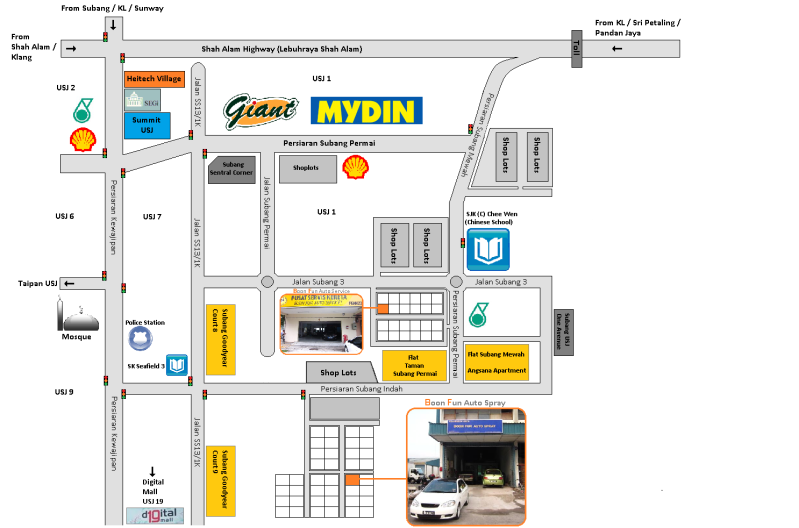
The cost of this paintjob is estimated to be between RM3,500.00-RM4,000.00. You get what you pay for. Additional charges included in the given price for silver dust, extra durable UV resistant clear coat, and of course, warranty against cracking. Many thanks to Boon Fun Auto for working on this car. Details are as per below. Painting can be done as low as RM1,500.00 onwards, quality and price is negotiable but be rest assured that you will get more than what you pay for. They also do collision repair, knocking, touch ups, and also have a general workshop.


P/S : I have also applied a layer of wax and will be posting about it pretty soon when I find the time to. Till then, toodles!


White is the way to go :).

Contact method/details:

Jackson (For Inquiries)

016 983 2828 (If he doesn't reply call, please sms and he will get back to you ASAP)

Operating Hours: 9:30 am to 6:30 pm (Monday—Saturday)

user posted image


user posted image